
Research Roundup: May 19, 2026
Best of cannabinoid science this week...
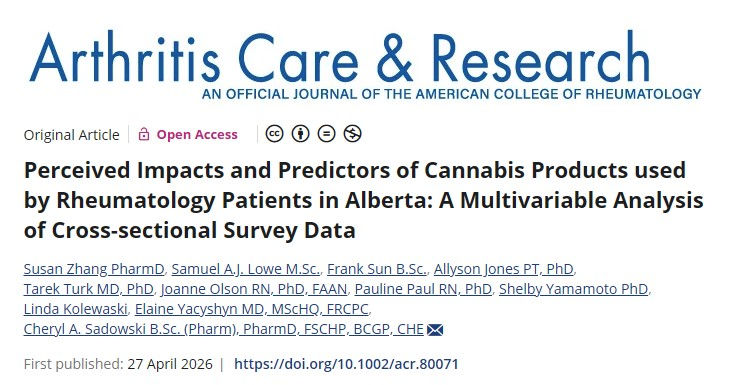
For people with a rheumatological condition, those using THC/CBD-balanced products had the highest positive impact scores
Perceived Impacts and Predictors of Cannabis Products used by Rheumatology Patients in Alberta: A Multivariable Analysis of Cross-sectional Survey Data
For schizophrenia & CBD, a meta-analysis of 5 trials found improvements to positive symptoms (hallucinations, delusions, disorganized speech, etc)
Cannabidiol for the treatment of positive and negative symptoms in schizophrenia spectrum disorders: a systematic review and meta-analysis
In menopausal women, a review on the potential of cannabis for sleep disturbances, genitourinary symptoms & hormonal changes
Medicinal Cannabis and Sleep Improvement in Menopausal Women: Integrating Nocturia, Genitourinary Syndrome of Menopause, and Endocannabinoid Regulation
For neuropsychiatric disorders, a review of targeting the endocannabinoid system (with great charts)
The Endocannabinoid System in Neuropsychiatric Disorders: Mechanisms, Dysregulation and Therapeutic Potential
For depression, on the evidence of cannabis helping via reductions of neuroinflammation in the brain & hyperactivity in the hypothalamic–pituitary–adrenal (HPA) axis
Interplay between the HPA Axis and Inflammation as Mechanisms Therapeutic Targets of Cannabis sativa in Depression
For Alzheimer's disease, a review of the data for CBD & THC
Cannabinoids in Alzheimer's disease: animal–human evidence and clinical pharmacology challenges
For cannabis & chronic pain, a Polish review of the evidence
Practical aspects of using cannabis in the treatment of chronic pain and the current situation in Poland: a narrative review
In a rat model of neuropathic pain with depression & anxiety, CBD reduced anxiety, depression & pain-related behaviors via the CB1 & a serotonin receptor in the anterior insular cortex (integrator of sensory & emotional aspects of pain)
Cannabidiol in the Anterior Insular Cortex Attenuates Chronic Neuropathic Pain and Comorbid Anxiety- and Depression-Like Behaviors: Involvement of CB1 and 5-HT1A Receptor Signaling
In a female rat model of depression, CBD caused increased freezing times, higher cortisol levels & improved memory-related performance
Effects of Cannabidiol on Behavior and Oxidative Stress in a Rat Model of Depression Under Chronic Stress
In a mouse model of PTSD, CBD shifted their genes towards non-stressed levels
Cannabidiol modulates spontaneous recovery through distinct and conserved transcriptomic signatures in mPFC subregions
In a rat model of lung injury due to blood loss, CBD reduced oxidative stress, suppressed inflammation & inhibited apoptosis (programmed cellular suicide)
Cannabidiol attenuates lung ischemia-reperfusion injury by modulating RIPK1/RIPK3-mediated necroptosis and HIF-1α/VEGF signaling
In rats, the combination of cannabis & aerobic exercise modulated cardiac inflammation
Cannabis supplementation combined with aerobic exercise is associated with modulation of AKT, PI3K, and inflammatory gene expression in cardiac tissue and blood of fatty liver rats
In mice taking CBG, this thesis project found no significant impact on motor coordination or fatigue
Use of a Cannabigerol and Cannabidiol Formulation on Motor Coordination and Fatigue in the C57BL/6 Mouse


Comments